Brook Benton

Benjamin Franklin Peay was born in Camden, South Carolina, in September of 1931. Vocally, he was coached by his father, who also engendered in him the patience he would need to display if he were to succeed as a singer in a professional capacity.
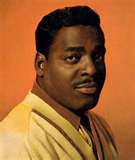
Brook Benton moved to New York, in 1948, at the age of seventeen, where he sang as a member of one gospel group before, three years later, joining another. He briefly sang on recordings, in 1955, that were directed by, the now legendary, Quincy Jones, who was twenty-two at the time.

Nonetheless, fame proved to be elusive, forcing Brook to try his hand at songwriting. He also sang on demonstrations of other writers’ tunes, which was really helpful because it provided him with instant cash. However, it was  to be his songwriting that was to grab the attention of those in the industry.

Firstly, there was “The Stroll”, recorded by the Canadian group, The Diamonds, then, the catchy “A Lover’s Question” by Clyde McPhatter. Buoyed by their success, Brook decided that he, himself, should record another of his own compositions, “It’s Just A Matter Of Time”. It was destined to spend nine weeks at No.1 on the rhythm and blues charts in the first half of 1959 and proved to be the launching pad to Brook’s substantial career as a solo artist.

http://www.youtube.com/watch?v=cuceTOjSubU

Brook’s last hit of substance was “Rainy Night In Georgia”, written by Tony Joe White, in 1970. It sold more than a million copies for the soulful baritone.

http://www.youtube.com/watch?v=VW3IWMJineo

Brook Benton died in April of 1988, at the relatively young age of fifty-six, from the complications which arose from the contraction of spinal meningitis.

The names of tracks by Brook Benton can be located in the suggested playlist.
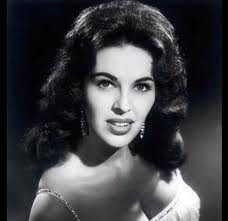
The Drifters

Clyde McPhatter had been the leading singer in The Dominoes. When he was no longer wanted by that group, a new male group was formed around his voice: that of tenor. The Drifters, as this new quartet was called, created a driving vocal style as depicted in its first hit, “Money Honey”, in 1953.

Other classic rhythm and blues numbers followed as the musical revolution that was to become known as rock and roll unfolded. “Such A Night”, which was covered by Johnnie Ray, “Honey Love” and “What’Cha Gonna Do” were all prime examples of this new style.

Clyde McPhatter left The Drifters, to pursue a solo career, in 1955, and, over the years, there followed a succession of leading singers that included Johnny Moore, Johnny Lee Williams, Ben E. King — famed for his solo recordings of “Spanish Harlem” and “Stand By Me” — and Rudy Lewis.

The Drifters struggled to make an impression on the charts in 1957 and 1958 before experiencing a golden period that began with “There Goes My Baby”, in 1959, and virtually ended with “Under The Boardwalk” and “Saturday Night At The Movies”, in 1964. These five years also included such hits as “Save The Last Dance For Me”, “On Broadway” — revived by George Benson in 1978 — and “Up On The Roof”.

http://www.youtube.com/watch?v=sv4v_z0UepM

Although The Drifters’ run of hits ended in its native America in 1966, for whatever reason, the group’s popularity was unexpectedly reborn in Britain between 1972 and 1976. A series of eight entries to the Top 10 on the British singles’ charts during these five years included “Come On Over To My Place”, “Like Sister And Brother”, “Down On The Beach Tonight”, “Kissin’ In The Back Row Of The Movies”, “Can I Take You Home Little Girl”, “There Goes My First Love” and “You’re More Than A Number In My Book”; with “Hello Happiness” just falling short of joining these aforementioned seven hits. The eighth entry was a double-sided single that reissued the mid-Sixties’ recordings, “At The Club” and “Saturday Night At The Movies”.

The names of additional tracks by The Drifters can be found in the suggested playlists.

Little Peggy March

Margaret Annemarie Battavio was born in Pennsylvania, in March of 1948. She was to be heard singing at a cousin’s wedding, at the age of just thirteen and promptly signed to a contract to record on the label of RCA.

As Margaret was only short and because she had been born in the month of March, it was decided that she would adopt the name of Little Peggy March. Peggy’s success was almost instantaneous, for by the time she was fourteen, in April of 1963, her recording, “I Will Follow Him”, had soared to No. 1, not only on the American pop charts but those of other countries, as well. It was a translation of a French song, “Chariot”, recorded in the year prior to this , by the British vocalist, Petula Clark. Her singles, “I Wish I Were A Princess” and “Hello Heartache, Goodbye Love” also entered the American charts.

Because Peggy was so young, the job of caring for her finances was placed in the hands of her manager. However, by the time she had finished high school, she discovered that her fortune had been squandered.

Although she continued to record, it was to be in Europe and Asia where she would find success. Perhaps this was why, in 1969, Peggy moved to live in Germany where she resided until 1981.

“When The Rain Begins To Fall”, which Peggy co-wrote, became a major hit in Europe for Jermaine Jackson and Pia Zadora, in 1984. The song, “I Will Follow Him”, reappeared, in the film, ‘Sister Act’, in 1992.

The Rascals

I once heard it said that the years from 1964 to 1969 mark the most varied and innovative period in the history of popular music. For those of us who remember that period with clarity, it is difficult not to concur. These years were so musically unique and the quality of the songs being written, and subsequently recorded, so high, that the six were littered with what were termed ‘One Hit Wonders’: artists who failed to write or find another song of a sufficient standard as to enter or impact upon charts that were so brimful of talent.

The soul group, known as The Rascals, was no such ‘one hit wonder’. Formed by singer and organist, Felix Cavaliere, the band’s remaining members were singer, Eddie Brigati, Canadian guitarist, Gene Cornish, and drummer, Dino Danelli; it became the first all-white group to be signed to Atlantic Records.

The quartet jammed and wrote songs in 1964 and 1965, and by 1966 those who attended some of the more notable clubs in and around New York City were marvelling at the group’s showmanship and sensational sound. The band had been forced to change its name to The Young Rascals, in order to avoid the prospect of litigation being launched by a similarly named preexisting group. Nevertheless, eventually, the four were permitted to drop the word ‘Young’ from their title.

http://www.youtube.com/watch?v=LrCEEDyXYjE

The Rascals’ first hit of significance was “Good Lovin'”, in 1966, which had originally been released, one year earlier, by The Olympics. Five other such hits followed, the most prominent of which were “Groovin'”, “A Beautiful Morning” and “People Got To Be Free”.

http://www.youtube.com/watch?v=sastKEBZhXY

Please, refer to the suggested playlists for the names of other tracks by The Young Rascals/The Rascals.

Clarence Clemons

Born in Norfolk, Virginia, in January of 1942, Clarence Clemons appeared destined for a career in sport, as opposed to one in rock and roll. This changed, however, when he received severe concussion in a car accident, which was to sideline him for two years, away from his beloved professional football.

Clarence had been playing the saxophone since the age of nine. He firstly became a member of Norman Seldin and The Joyful Noise, and it was while playing in Norman’s group that he met Bruce Springsteen. From there it was only a matter of time before Clarence joined Bruce’s E Street Band.

In 1983, Clarence found himself with some spare time and decided to embark upon his first recording as a solo artist. The result was the release of the album, ‘Rescue’, credited to Clarence Clemons and The Red Bank Rockers. From this LP came the single, “A Woman’s Got The Power”. The opening track, “Jump Start My Heart”, instantly reminds me of “Nutbush City Limits”. The last two tracks are the pick, “Savin’ Up”, written by Bruce Springsteen, and a cover of “Resurrection Shuffle”, which had originally been a hit for the British outfit Ashton, Gardner and Dyke, in 1971.

Two years later came Clarence’s second album, ‘Hero’, known best for his duet with Jackson Browne, “You’re A Friend Of Mine”. In my opinion it is a superior album to ‘Rescue’. The only track I wouldn’t care to listen to again is “The Sun Ain’t Gonna Shine Anymore”, a cover of The Walker Brothers’ original from 1966. Some recordings are so good they just shouldn’t be revived!

Clarence passed away in June of 2011, at the age of sixty-nine. He had suffered a stroke a week before his death.

David Houston

Gene Austin, an early recording star of the 1920s and ’30s, with many hits which included “Yes Sir! That’s My Baby”, “Five Foot Two, Eyes Of Blue”, My Blue Heaven”, “Tonight, You Belong To Me”, “Ramona” and “Bye Bye Blackbird”, was David Houston’s godfather. It was he who encouraged him to become a singer and pianist.

David, whose ancestors included Robert E. Lee and Sam Houston, was born in December of 1938, in Bossier City, Louisiana. At the age of twelve he appeared on the ‘Louisiana Hayride’, a hugely popular country radio programme, which was second only to the ‘Grand Ole Opry’.

http://www.youtube.com/watch?v=ec6ocZNrdvY

Even so, David had to wait until 1963 to have his first hit, a cover of Harold Dorman’s “Mountain Of Love”, from 1960, which sounds almost entirely dissimilar to the original. Over the next decade and a half, David Houston enjoyed much success by recording a long series of entries to the country charts, seven of which went to number one. Some crossed over to the pop charts, the most noticeable fittingly being his biggest country hit, “Almost Persuaded”, in 1966.

David Houston also recorded duets with Tammy Wynette and Barbara Mandrell. Sadly, his life was cut short in November of 1993, when a cerebral aneurysm ruptured.

The names of more tracks by David Houston can be found in the suggested playlists.

The Move

The Move formed in early 1966. Its members were Roy Wood (guitar and vocals), Carl Wayne (vocals), Trevor Burton (bass), Ace Kefford (guitar) and Bev Bevan (drums), who were based in Birmingham, England.

A prolific writer of songs, Roy Wood supplied the group with virtually all of its material. While it had its roots in soul and rhythm and blues, the band was highly entertaining and innovative and could switch from soul to psychedelia during the course of the one show. The Move became known for its outlandish stunts on stage. Objects, such as television sets, would be smashed, and effigies burned.

Try as it may, the group failed to break into the lucrative American market. Perhaps this was one reason why the band underwent so many changes in its personnel.

http://www.youtube.com/watch?v=q6o5F0s2SjQ

One such change took place, in 1970, when Jeff Lynne (later of E.L.O. and The Traveling Wilburys) became a member. Nevertheless, Roy and Jeff could not see eye to eye and, therefore, decided to go their separate ways a year later.

In 1972, Roy Wood formed Wizzard, which was to have a string of hits in Britain, that extended into the 1980s. Jeff Lynne, formed The Electric Light Orchestra (E.L.O.) and saw it develop into one of the Seventies’ biggest and most successful bands on stage.

The names of more tracks by The Move can be found in the suggested playlists.

Joe Tex

Joseph Arrington Jr. was born in Texas, in August of 1933. He sang in gospel groups in his formative years, before the winning of a local talent quest led to him being signed to a recording contract, in 1955. Nevertheless, the by now Joe Tex had to deal with a succession of recording companies, over the period of a decade, before he was to experience his first hit of any significance.

“Hold What You’ve Got” was recorded by the soulful Tex, in the famed studios of Muscle Shoals, Alabama, in November, 1964. It was to be the title track for Joe’s first album.

Incongruously, most of Joe’s recordings were made in the ‘capital’ of country music, Nashville, Tennessee, although he also recorded in nearby Memphis, and, on one occasion, in New York.

http://www.youtube.com/watch?v=XVKNdZxVDhg

In 1965, Joe Tex achieved his first No.1 on the rhythm and blues charts with “I Want To (Do Everything For You)” and followed it, almost immediately, with another, “A Sweet Woman Like You”. Joe’s biggest hit came in 1972, when “I Gotcha” sold in excess of a million copies.

Joe’s talents extended into that period of music known as disco, when, in 1977, “Ain’t Gonna Bump No More (With No Big Fat Woman)” was also sell more than a million records. A convert to the religion of Islam, Joe Tex had changed his name to Joseph Hazziez, in July of 1972. He died of a heart attack in August, 1982 at the age of forty-nine.

The names of more tracks by Joe Tex can be located in the suggested playlists.

The Orlons

Philadelphia has produced many famous recording artists over the years and while The Orlons might not be as famous as some of the others, the group certainly had its time in the spotlight. The quartet differed from the female groups of the time, in that one of its members was a male, baritone Steve Caldwell. Its other members were Marlena Davis, Rosetta Hightower and Shirley Brickley.

When The Orlons’ first two singles failed to chart, the group’s record label, Cameo, remained loyal. Finally, the label’s prolific songwriters, Kal Mann and Dave Appell, came to believe that they had written the song which would  launch The Orlons’ career; the breezy “The Wah-Watusi”.

So correct were they, that the single rose to as high as No.2 on Billboard’s pop chart, in the middle of 1962. The Orlons was off and running, with Rosetta now installed as the principal vocalist.

“Don’t Hang Up”, the following release, soared into the Top Five. The duo of hits, coupled with constant touring and regular appearances on the nationally televised Dick Clark’s American Bandstand, meant that it was no surprise when “South Street” jumped up the chart, peaking at No.3, in the first half of 1963.

http://www.youtube.com/watch?v=K2MuhY3sBjo

Little did the group know that this was to be its last visit to the Top Ten, although there were two Top Twenty entrants to come, namely “Not Me”, which had been originally recorded by Gary “U.S.” Bonds, and “Crossfire”.

Wanda Jackson

Every now and then I come upon an artist whom I believe deserved to achieve a greater degree of success than their recordings actually did. Wanda Jackson is one such artist.

Wanda was born an only child to a pair of battlers in Oklahoma, in October of 1937. In search of a better life the family moved to Los Angeles, in 1942, where Wanda learned to play the the guitar, as well as the piano. By 1949 the trio had returned to Oklahoma, where Wanda came to the attention of the legendary country vocalist, Hank Thompson.

By 1954 Wanda had been signed to a recording contract and in the following year, became a full-time performer. She toured the South with Elvis Presley, before he burst on to both the national and international stages. Elvis was one of the people who encouraged her to try her hand at recording rock and roll, nevertheless, the only real success she had was to be in Japan, where “Fujiyama Mama” became a major hit, in 1958.

http://www.youtube.com/watch?v=uGuPqPte52s

“Let’s Have A Party” — originally recorded by Elvis as “Party” and sung in his film, ‘Loving You’, in 1957 — revived her career, in 1960, when she had all but despaired of her future. Nonetheless, Wanda was to return to her roots, as a country artist, with such self-penned hits as “In The Middle Of A Heartache” and “Right Or Wrong”, in 1961.

The names of other recordings by Wanda Jackson are listed in the suggested playlists.